Booking, sensors and AV: what technology adds to a design-led workplace

Walk through a well-designed office and you can usually tell what the designers were aiming for. The light is right, the zones make sense, and there’s a place to focus and a place to collaborate.
But a great layout only tells half the story. If people can’t find a free room, the screen won’t connect, or nobody knows which desks are actually used, the design stops working the way it was meant to.
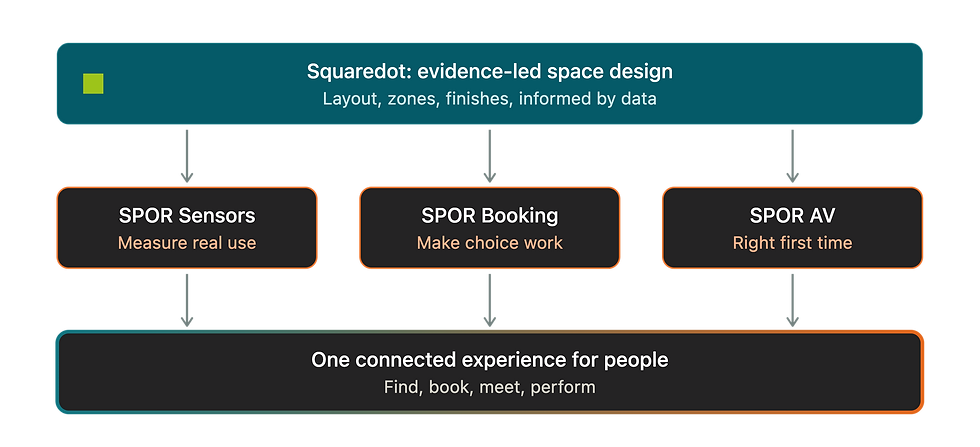
That’s why Squaredot and SPOR Group now sit together. Space, technology and user experience shouldn’t be planned separately. Here’s what technology adds when it’s part of the design from day one.
1. Sensors turn assumptions into evidence
Our workplace studies since 2022 show average desk utilisation of just 42%. We know that because we measure it, and measuring is where good design starts.
Occupancy sensors show how a space is really used: which desks fill up, which meeting rooms sit empty, and which days are busy. That means decisions about desk ratios, room sizes and neighbourhoods rest on data rather than on the loudest opinion in the room.
And the data doesn’t stop being useful once the project is delivered. Ongoing insight lets you adjust the workplace as your teams change, rather than discovering in two years that it no longer fits.
2. Booking systems make choice work
Flexible working only works if people can find what they need. A good booking system lets someone reserve a desk near their team, a quiet focus booth or a room that suits their meeting, before they leave home.
It also protects the design itself. Without a booking system, you tend to get hoarded rooms, “ghost” bookings and frustrated staff. With one, the variety of spaces we design is actually available to the people they were designed for.
3. AV decides whether meetings work first time
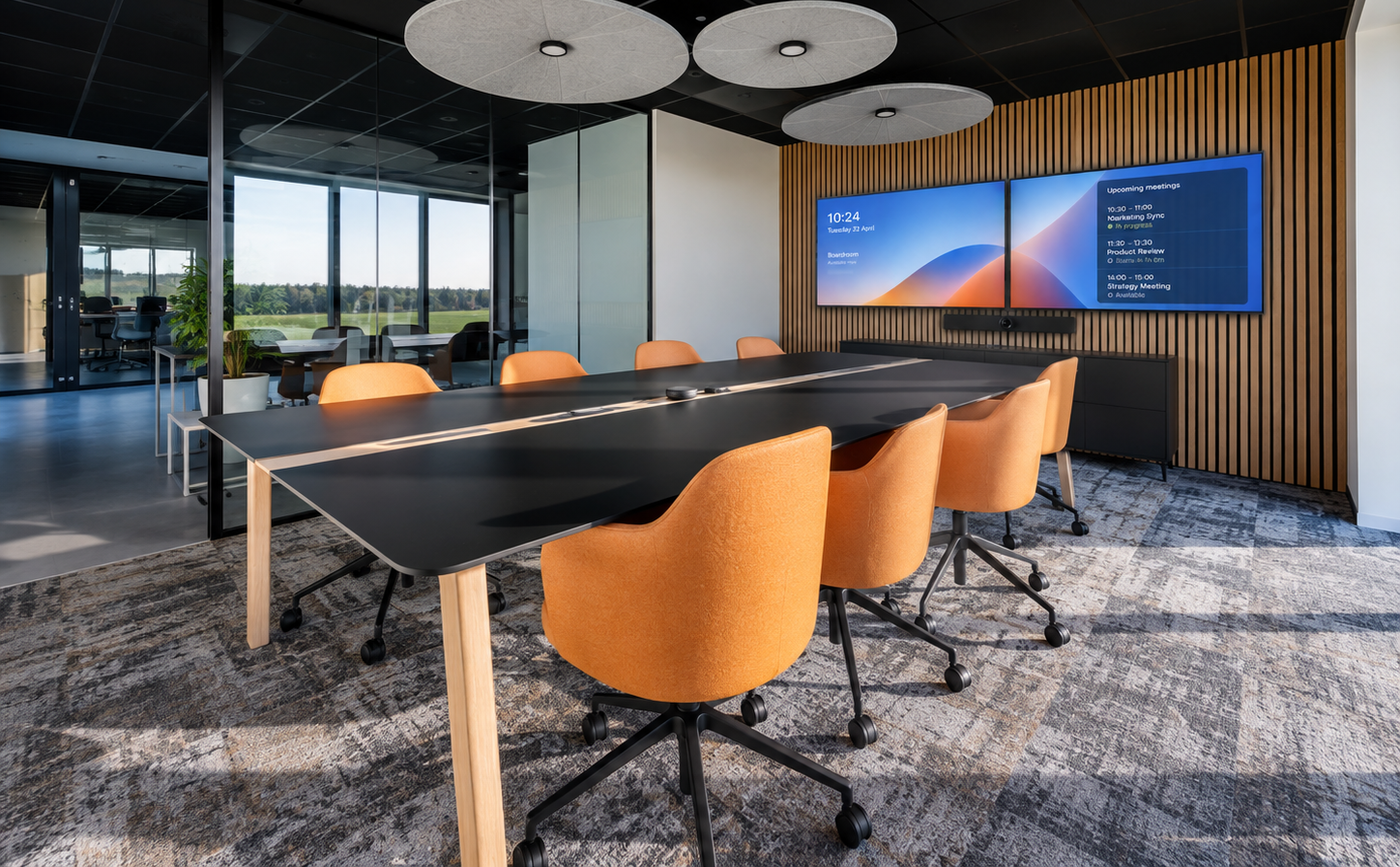
We’ve all seen the meeting that loses ten minutes to cables, adaptors and “can you hear me?”.
Well-designed AV is the opposite: simple, consistent and quick. Room acoustics, camera positions, screen sizes and microphone coverage should all be planned alongside the furniture and finishes, because they affect each other. A beautiful room with poor sound is a poor room.
When hybrid meetings feel natural for the people on screen as well as the people in the room, teams use the space more and trust it more.
4. One connected experience
The most important change isn’t any single technology. It’s treating the physical space, the technology and the user experience as one connected experience.
In practice that looks like:
A booking system that reflects the real room layout, not a generic list of names.
Sensor data feeding back into design, so each refresh is better informed than the last.
AV that’s the same in every room, so people don’t need training to hold a meeting.
Technology that’s planned in early, so cabling, power and screens are part of the design rather than added later.
What this means for your project
If you’re planning a refurbishment or move, ask these questions early:
How will we measure how the space is used, before and after?
How will people find and book what they need?
Will our meeting rooms work the same way every time?
Who is responsible for making design and technology work together?
A workplace built around how people actually work needs the space and the technology to agree with each other. Talk to our team about how an evidence-led, connected approach could work for your next project.


